
West-facing windows bring beautiful natural light into a home, but by afternoon, that light can turn intense. Direct sun creates glare on screens and reflective surfaces, makes rooms feel warmer, and exposes furniture and interiors to prolonged sunlight. In Bangalore, where afternoons can be particularly bright, the right window curtains make a real difference to everyday comfort. Choosing window curtains for a west-facing room starts with understanding how that room responds to afternoon light. The direction of the window, the size of the glass, how the space is used, and the curtain fabric you choose all shape how well the treatment performs.
The goal with curtains Bangalore homeowners choose isn't necessarily to block out every ray of sunlight, since curtains Bangalore stores stock span a wide range of styles and price points. It's about finding the right balance between natural light, comfort, privacy, and how the room looks. Depending on the space, that might mean sheer window curtains that soften the afternoon sun, blackout window curtains for stronger light control, or motorised window curtains that make larger windows easier to operate. Below are five practical things to think through before you choose your window curtains.
For anyone comparing curtains Bangalore has to offer, the direction a window faces affects when sunlight enters a room and how strongly it's felt indoors. West-facing windows catch direct sun later in the day, when the sun sits lower and its rays travel deeper into the room. That can make everyday activities harder: a TV screen becomes difficult to see, a home office gets hit with glare, and rooms with large glass areas feel warmer as the afternoon wears on. Furniture, flooring, and décor placed near the window face the same prolonged exposure, and over a few seasons that exposure adds up, even if it isn't obvious day to day. This is where window curtains stop being purely decorative. The right window curtains control the intensity of afternoon light while still letting you decide how much natural light stays in the room, and it's worth treating that decision with the same care you'd give to any other fixture that gets used every single day.
This holds true whether you're comparing curtains Bangalore stockists in a mall or a smaller local showroom. Requirements differ from space to space, too, and this is exactly why the room's daily use matters as much as its orientation. A bedroom that takes the full brunt of afternoon sun may need window curtains with stronger light control, especially if it's used for daytime rest or naps, while a living room used mostly in the evenings might do better with softer window curtains that keep things bright during the day and only come into their own once the sun drops. A home office, meanwhile, may need window curtains that cut screen glare without making the space feel dark or closed off for hours at a stretch. Understanding this difference makes it easier to pick window curtains that actually work for the room, not just ones that look good in isolation, whether you're shopping for curtains Bangalore online or comparing options in Bangalore showrooms. If harsh sunlight is the main concern, lighter window curtains may be enough to soften the glare; if direct sun stays strong for hours, a denser curtain fabric or a layered setup makes more sense. It also helps to think about how many people use the room and when, since a space that's busy all day tolerates far less compromise than one that's mostly empty until evening. The right window curtains for a living room in Bangalore may not be the right choice for a bedroom, study, or dining space, and treating each room on its own terms usually gives a better result than applying one blanket solution across the whole home.

Colour and pattern tend to get the most attention when people shop for window curtains, but curtain fabric plays an equally important role in how the treatment performs, and in a west-facing room the curtain fabric often matters more than the colour itself. Lightweight curtain fabric creates an airy look and lets more daylight in, which is useful when the goal is softening harsh sun without closing the space in, and it tends to suit rooms where you want to preserve a bright, open feel even when the window curtains are drawn. A heavier curtain fabric, on the other hand, forms a more substantial barrier between the glass and the room, and depending on its weave, weight, and construction, it can offer much stronger control once the afternoon sun peaks, which matters in rooms where comfort during the worst hours outweighs the appeal of extra brightness. Fabric also shapes how window curtains fall: a structured material tends to look fuller and more formal, while a softer material gives the room a more relaxed, lived-in feel. It's worth looking at curtain fabric samples inside your own home rather than relying on showroom lighting, since daylight shifts through the afternoon, and a curtain fabric that looks one way under store lights can look completely different once real sun passes through it, sometimes revealing a warmth or sheen that wasn't obvious indoors.
Colour still shapes how a room feels, but it shouldn't be the only factor in your decision. Light, neutral window curtains keep a room feeling bright and spacious even when drawn, which suits smaller rooms or spaces you don't want to feel boxed in, while darker window curtains create a cosier, more enclosed feel that can work well in bedrooms or formal living spaces where you're happy to trade some brightness for atmosphere. But colour alone doesn't determine how well window curtains manage sunlight. The density, weave, and construction of the curtain fabric have a bigger impact on performance, and a light coloured, densely woven fabric can control light better than a dark, loosely woven fabric, which surprises a lot of people who assume darker automatically means better coverage. When comparing curtains Bangalore options, it's worth looking at colour and curtain fabric performance together, since similar shades of curtains Bangalore retailers stock are often available in very different materials, and asking about the weave or thread count can tell you more about real-world performance than the colour swatch ever will.
Different rooms call for different types of curtains Bangalore homeowners can choose from, and the right choice usually comes down to how much control you need versus how much natural light you're willing to give up. Here's how the three most common window curtain options compare for west-facing spaces, along with where each one tends to work best in practice.
Sheer window curtains work well when you want to soften direct sun without losing the room's brightness, and they're often the first layer people reach for in a west-facing living room or dining space where natural light is part of the appeal. A sheer layer sits between the glass and the interior, diffusing incoming light instead of leaving the window bare, and as the afternoon gets brighter, a second layer of window curtains can be drawn for extra control without losing the softness the sheer provides underneath. The curtain fabric weave matters here too: a finely woven sheer creates a softer, more diffused look and blocks slightly more glare, while a more open weave lets more daylight through and suits rooms where brightness is the priority over control.
For curtains Bangalore shoppers weighing their options, blackout window curtains suit rooms that need stronger control, such as bedrooms, media rooms, and spaces where direct sun makes the room hard to use during certain hours, particularly homes where someone works night shifts or naps during the day. They let you create a darker environment during the brightest hours, then open back up once the intensity drops, and blackout window curtains don't need to stay closed all day just because they're capable of full coverage. Construction and coverage vary considerably between blackout curtain fabric options, with some using a dense weave and others relying on a separate lining, so it's worth checking that rather than choosing on looks alone, since two blackout window curtains that look identical on a rail can perform very differently once the sun is actually on them.
Among curtains Bangalore homeowners often overlook, embroidered window curtains bring texture and pattern into the mix without giving up function, and they're a good option for anyone who feels blackout or plain sheer window curtains look a little flat for a formal or well-decorated room. They suit living rooms, bedrooms, and formal spaces where the window curtains are part of the overall interior statement rather than just a functional layer. The base curtain fabric still matters here, since it needs to complement the embroidery while still suiting the room's sun exposure, and a heavier curtain fabric base can help protect a delicate embroidered pattern from fading under direct sun over time. Pairing an embroidered outer layer with a simpler inner layer of window curtains adds visual interest while keeping light control flexible, giving you the decorative impact without sacrificing everyday practicality.
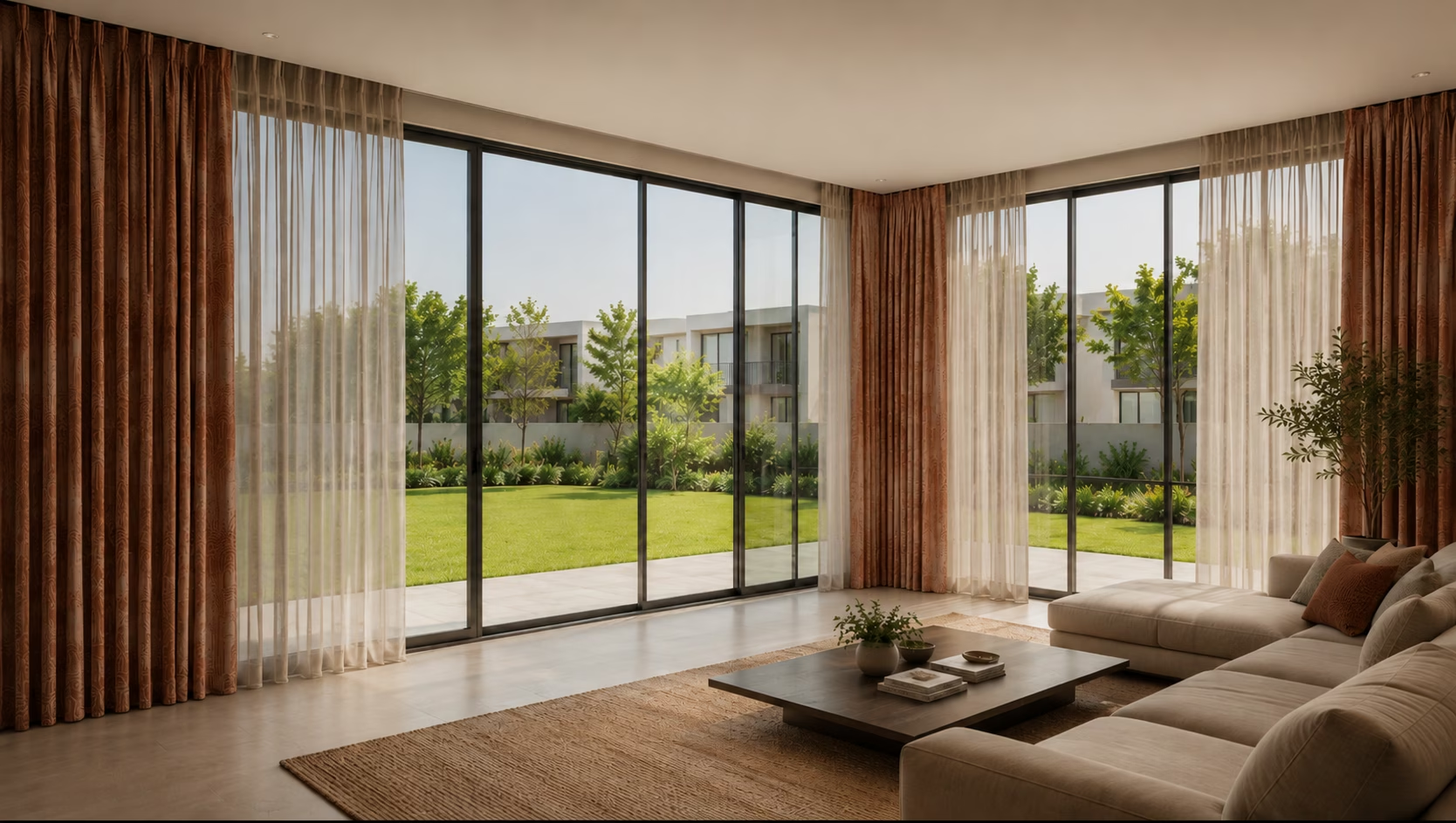
A west-facing window doesn't need one treatment to handle every lighting condition, and this is where layering the curtains Bangalore homes rely on earns its keep, particularly since the same room can swing from soft morning light to harsh afternoon glare within a few hours. Layering lets window curtains do different jobs through the day: a sheer layer softens daylight, while a fuller outer curtain gets drawn once direct sun turns uncomfortable, and the two window curtains working together often outperform a single heavier curtain used on its own. It works particularly well in living rooms and bedrooms, where the lighter layer of window curtains stays in use during softer hours and the outer layer adds coverage as the sun strengthens, letting the room adapt without anyone needing to think about it too much. The two layers don't have to match exactly, either. Coordinating colours with different curtain fabric textures adds depth and visual interest, while similar tones create a calmer, more unified look if you'd rather the layering blend in than stand out. Fabric pairing matters here too, since a lightweight inner layer with a fuller outer curtain tends to give a more balanced result than combining two heavy fabrics, which can feel overly dense and hard to manage on the same track.
For large west-facing windows specifically, layering window curtains pairs well with a few other considerations that smaller windows don't usually need to worry about. Width and fullness affect how window curtains look when closed, and length changes the room's overall proportions, with full length window curtains creating a clean visual frame around large openings that suits contemporary curtains Bangalore interiors well, especially in apartments with floor-to-ceiling glass or wide balcony doors. Operation becomes a real practical issue at this scale, too: a wide span of heavy curtain fabric is difficult to move manually multiple times a day, and doing so repeatedly tends to wear out the fabric and the track faster than expected. Motorised window curtains solve this, letting you adjust large openings easily as the light changes without wrestling with heavy fabric by hand, and they're worth the extra cost for anyone who finds themselves avoiding the effort of opening and closing window curtains that are simply too large to manage comfortably.

Afternoon sun affects more than the room's brightness. Furniture, rugs, artwork, and other furnishings placed near west-facing glass face the same prolonged exposure, and over time, regular sunlight can affect the appearance of certain materials and finishes, fading upholstery or dulling wood finishes in ways that are easy to miss until the difference becomes obvious next to a protected surface. Well-chosen window curtains add a layer of protection between the glass and the room and drawing them during peak sun reduces direct exposure to nearby furnishings without requiring any real change in daily habits. The goal isn't to keep window curtains shut all day, though; instead, adjust them as conditions change, letting light in when it's softer and adding coverage when the sun is at its strongest, so the room stays comfortable and protected without feeling permanently shut off from the outside. If you have furniture or finishes placed close to large west-facing windows, this is worth building into your window curtain decision from the start rather than treating it as an afterthought once you've already noticed some fading.
Bangalore's weather shifts considerably through the day, and a bright afternoon can give way to cloud cover or rain within the space of an hour, which means your window curtains need to hold up across different conditions, not just one. This is a common concern for curtains Bangalore households given the city's unpredictable skies, and a lighter fabric helps maintain natural light on overcast days, while a heavier outer layer adds coverage when the sun is strong, and having both available means you're never stuck with window curtains that only suit half the weather you actually get. This flexibility matters most in homes where windows serve both daylight and ventilation needs, since window curtains that only work well in one set of conditions end up being adjusted constantly or, more often, just left in whatever position is least inconvenient. Rather than designing around one fixed condition, it helps to think about how your window curtains will perform across a full day: open during softer morning light, partially drawn as the afternoon builds, and fully closed when the sun peaks, before easing back open again as the evening cools things down. This is exactly the kind of flexibility homeowners exploring curtains in Bangalore should look for.
A west-facing window doesn't have to dictate how you use a room every afternoon. The right window curtains manage strong sunlight while still letting in the natural light that makes a space feel open and connected to the outdoors, and getting there is less about finding one perfect product and more about matching a few decisions to how the room is actually lived in. Start with the room itself: its exposure, its curtain fabric, its window size, its operating method, and whether layering makes sense given how the light changes there through the day. That's what makes the process of choosing curtains Bangalore homeowners rely on more straightforward, because it turns an overwhelming decision into a short list of practical questions rather than an endless scroll through colours and patterns. The right window curtains don't just cover the glass, they work with the window, the room, and the way you actually live in the space every day, and that's ultimately a better test of the right choice than how it looks on the first afternoon you hang them.
If you have a question about our service or your appointment, see our FAQs here.




.png)